
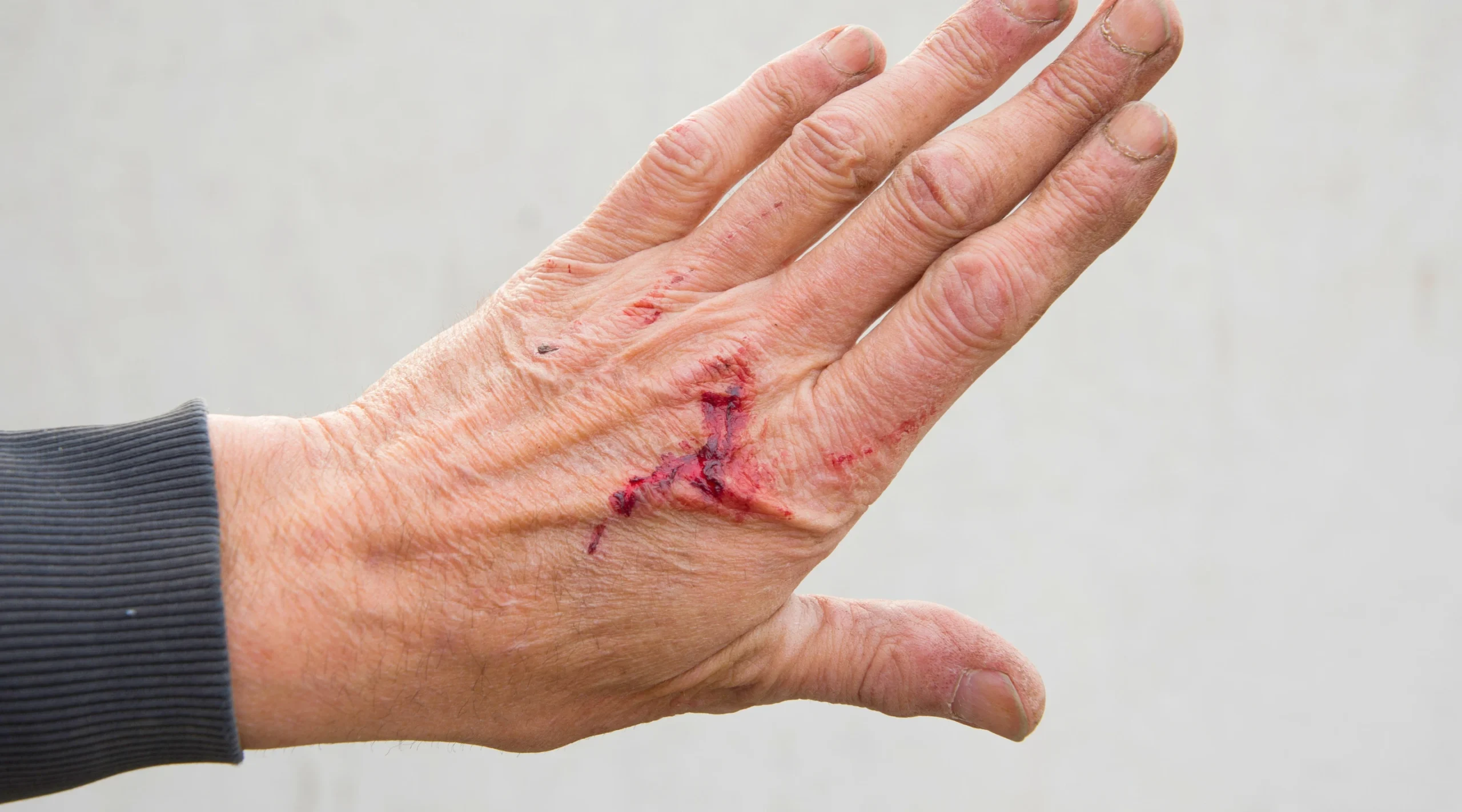
Why Does Elderly Skin Tear Easily?
As we age, our skin goes through natural changes. It becomes thinner, drier, and less elastic. The loss of collagen and subcutaneous fat reduces the skin’s ability to withstand friction, pressure, or minor trauma. This makes elderly skin more fragile and prone to skin tears or peeling, even from something as small as a bump, friction from clothing, or removing adhesive plasters. The risk is particularly high on areas like the arms and legs (LeBlanc & Baranoski, 2019).
First Aid for Skin Tears in Elderly Skin
If your loved one experiences a minor skin tear, don’t panic. Follow these simple but crucial steps:

1. Clean the Skin Tear Gently
Use clean water or a wound cleanser that’s safe for sensitive skin. Avoid rubbing or scrubbing the wound, as this can worsen the tissue damage.
2. Protect the Wound Area
Cover the wound with a sterile and non-adhesive dressing to keep it clean. Avoid plasters with strong adhesives, which can damage the surrounding skin when removed.
3. Keep the Wound Moist
A moist environment supports faster skin regeneration and helps reduce scarring. It’s key to a smoother healing process.
What’s the Safest Ingredient for Fragile Elderly Skin?
One highly recommended option is hypochlorous acid (HOCl). It’s a naturally occurring molecule produced by the immune system, known for its gentle yet effective antimicrobial properties.
HOCl is ideal for fragile or torn skin, as it helps clean wounds without causing stinging or further irritation. Unlike alcohol-based antiseptics or povidone iodine, it won’t damage healthy tissue or slow down healing.
Skin Tears in the Elderly Can Be Treated Safely
Skin tears might seem alarming, but with the right care and gentle products, healing is possible. The key is to keep the wound clean, moist, and protected—using ingredients that support the skin and not harm it.
With consistent care and the right tools, elderly skin can heal safely and comfortably.
References
LeBlanc, K., & Baranoski, S. (2019). Skin Tears: State of the Science. Advances in Skin & Wound Care, 32(9), 418–429.
NHS. (2025). Skin Care and Ageing. https://www.nhs.uk


Leave feedback about this