

Heat rash in babies is a common condition that occurs because their sweat glands are not yet fully developed.
Babies are also more likely to experience it when swaddled too tightly or dressed in too many layers.
Heat rash usually appears as small bumps or blisters on the skin and often clears on its own.
However, proper care is still needed to keep your baby comfortable and prevent further irritation.
Causes of Heat Rash in Babies
Hot and humid weather is the most common cause of heat rash. When temperatures rise, the sweat glands work harder.
But because the sweat ducts are still immature, sweat can become trapped and leak into the outer layers of the skin (epidermis and dermis).
This leads to rashes that feel itchy, uncomfortable, or prickly.
To help soothe heat rash in babies, you can try the following steps:
- Move the baby to a cooler room or shady area.
- Change sweat-soaked clothes and damp diapers regularly.
- Remove extra layers of clothing or blankets; choose loose, lightweight cotton clothing.
- Keep the baby’s skin clean and dry.
- Apply a soothing lotion such as calamine, then follow with a gentle moisturizer if the skin looks irritated.
Symptoms of Heat Rash
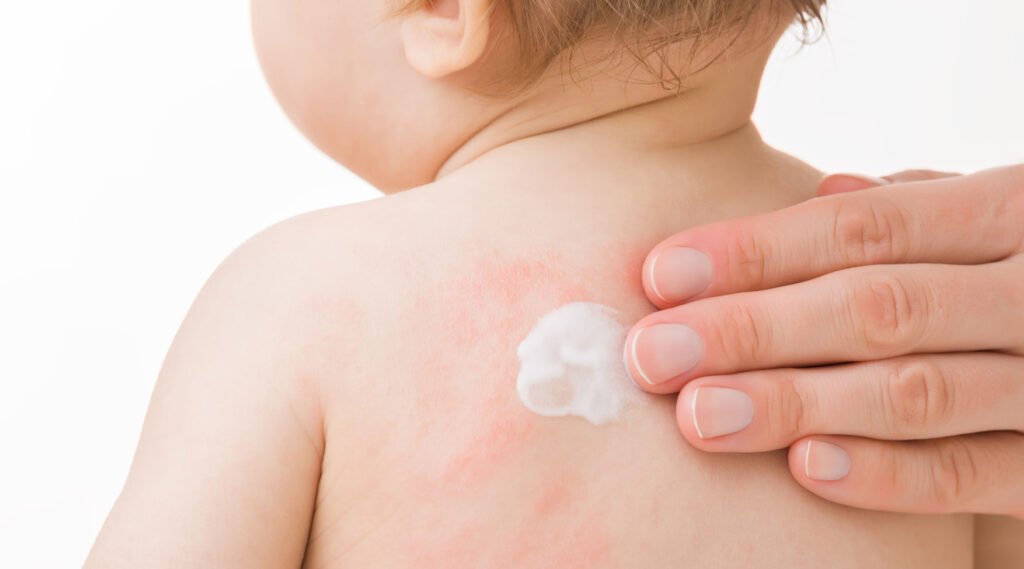
- Small pink bumps
- Commonly appear on the neck, chest, and upper back
- Develop during hot, humid weather or after direct sun exposure
- May cause itching
- Older children may feel a prickling or stinging sensation
- In babies, the rash may include tiny fluid-filled blisters
- Not accompanied by fever or pain
Care Steps to Help Heat Rash Heal Faster
Heat rash usually improves within a few days without specific treatment. But parents and caregivers can help ease the baby’s discomfort and speed up recovery with these steps:
- Move the baby to a cooler place when the rash first appears
- Keep the skin cool and dry
- Apply a clean, cool compress to the affected area
- Rinse off oil and sweat with cool water, then pat dry gently
- Clean skin folds regularly so sweat and oil don’t worsen the rash
- Dress the baby in loose, breathable cotton clothing
- Keep the baby well-hydrated—breastfed babies can nurse on demand, and older babies need access to adequate water
Avoid applying rash creams unless recommended by a doctor. Heat rash is not an allergic reaction, so typical diaper rash creams usually do not help.
If the heat rash is severe or doesn’t improve, a doctor may prescribe a mild steroid cream to speed healing.
Watch for signs of infection, such as fever or a rash that looks more inflamed. Infection can occur if the baby scratches the affected area.
Tips to Maintain Baby’s Skin Temperature and Moisture
1. Bathe the Baby
Bathe the baby in warm water for 5–10 minutes every few days or as needed. Use a gentle, soap-free cleanser to prevent irritation.
Choose fragrance-free products that do not contain botanicals or antibacterial ingredients, as these can irritate sensitive baby skin.
Avoid bubble baths because they can strip the skin of its natural oils.
After bathing, pat the skin dry—especially in skin folds. Baby powder or talc is not recommended.
2. Moisturize the Baby’s Skin
Use a thick, fragrance-free moisturizer daily, especially if the skin appears dry. Creams are more effective than lotions.
Apply more frequently if the baby’s skin is dehydrated. Avoid moisturizers containing botanicals, fragrances, or food-based ingredients, as they can disrupt the skin barrier.
Keep product hygiene in mind: avoid dipping your fingers back into jars. Use a small spatula or choose pump-style moisturizers.
3. Choose the Right Clothing
Dress your baby in lightweight, loose, soft cotton clothing and sleepwear. Avoid thick layers or rough fabrics that may irritate the skin.
Use a mild, fragrance-free detergent when washing baby clothes, and avoid antibacterial rinse products.
4. Sun Protection
A baby’s skin is susceptible to UV rays. Babies under 6 months should be kept out of direct sunlight. When outdoors, the best protection includes:
- Lightweight, skin-covering clothing
- A hat
- Stroller shade
- Staying in shaded areas
If the UV index reaches three or higher, apply broad-spectrum SPF 50+ sunscreen to exposed skin. Choose sunscreens formulated for babies or sensitive skin.
References
Health Direct. Accessed in 2025. Heat Rash.
Seattle Children’s. Accessed in 2025. Heat Rash.
The Royal Children’s Hospital Melbourne. Accessed in 2025. Skincare for Babies.





Leave feedback about this