

Self-care is essential for every woman who wants to look beautiful and feel confident. It’s not just about wearing the right outfit, but also about caring for your skin and overall well-being.
Yet, amid the focus on skincare and outward appearance, many women unknowingly overlook one essential aspect of self-care: intimate health.
In fact, self-care isn’t just about glowing skin. It’s also about keeping the body healthy from within, including its most sensitive areas.
So, what forms of self-care are important for the intimate health of modern women?
1. Consume Nutrient-Rich Foods

Self-care always begins with what we consume. The entire body—including the intimate area—needs proper nutrition to function optimally.
What we eat and drink affects hormonal balance, immune function, and the health of the vaginal microbiome.
To help maintain intimate health, choose foods rich in antioxidants, vitamins C and E, omega-3 and omega-6 fatty acids, protein, and probiotics (such as yogurt or fermented foods).
A balanced diet helps maintain healthy bacteria and reduces the risk of infection.
2. Maintain Intimate Hygiene the Right Way
In the Bathroom
It’s important to remember that the vagina has a natural self-cleaning mechanism. Clear or white vaginal discharge that is odorless and non-itchy is a sign of normal vaginal function.
Unlike the vagina, the vulva (the external area) cannot clean itself. Like other parts of the skin, the vulva should be gently cleaned with water and a mild, fragrance-free soap.
That is more than sufficient. There’s no need for excessive products.
After Urinating or Defecating
Clean the anus and vagina separately. Use one tissue per area and discard it immediately. Using the same tissue can transfer bacteria and increase the risk of urinary tract infections (UTIs).
When urinating, always wipe from front to back.
After Sexual Intercourse
A simple but important step: urinate after intercourse. This helps flush out bacteria that may have entered the urethra, lowering the risk of UTIs.
You may gently rinse the vulva with water and your fingers, but avoid washing or scrubbing the inside of the vagina.
3. Pubic Hair Care
Pubic hair has important biological functions, such as protecting the vulvar skin from friction. However, if you choose to remove it, pay attention to proper technique:
- Use a new razor each time
- Do not use the same razor for other body areas
- Dry and store the razor in a dry place, not on the bathroom shelf
- If ingrown hairs occur, apply a warm compress to help open the pores
Proper care helps prevent irritation and infection.
4. Change Underwear and Sanitary Products Regularly
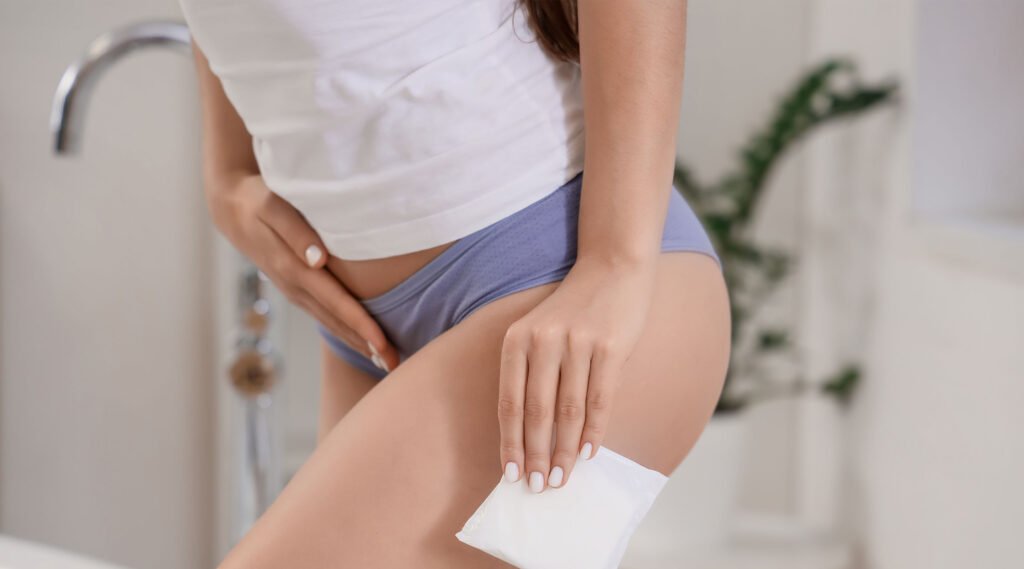
- Change underwear daily and choose cotton fabrics
- Avoid underwear that is too tight
- After exercising, change out of sweat-soaked clothes and underwear promptly
- During menstruation, change pads or tampons every 4–6 hours
These simple habits play a major role in keeping the intimate area dry and healthy.
5. Self-Monitoring
The best way to know whether your intimate area is healthy is to become familiar with it.
Take time to observe its appearance, scent, and sensations (such as itching, burning, or pain).
You can use a hand mirror, gently feel the area, notice the scent of your underwear, and consult a doctor regularly if you notice any unusual changes.
6. Routine Health Screenings for Women
Self-care also means undergoing regular health check-ups, including:
Pap Smear
To detect abnormal cells in the cervix and prevent cervical cancer. Recommended for women aged 21 and older or those who are married, every three years (or as advised by a doctor).
Breast Examination
Perform regular breast self-examinations (BSE) and undergo clinical breast exams to detect changes early.
Reproductive Cancer Screening
Examinations such as ultrasound and blood tests help detect ovarian and uterine cancers at an early stage.
What About Douching and Vaginal Steaming?
Trends such as douching (cleaning the vagina with special liquids) and vaginal steaming are often considered forms of extra care.
In reality, these practices are not recommended.
- Douching can disrupt the natural balance of the vaginal microbiome
- Vaginal steaming carries the risk of irritation and even burns to the vaginal and vulvar tissue
Rather than providing benefits, these practices can weaken the body’s natural defenses against infection.
Modern women’s self-care is not just about skincare and outward appearance. Caring for intimate health is an essential part of self-love.
With simple habits, proper care, and regular monitoring, women can stay healthy, comfortable, and confident—from the outside in.
References
Healthline. Accessed in 2025. Feminine Hygiene.
Saforelle. Accessed in 2025. Intimate Care Guide.
The Women’s. Accessed in 2025. How Can I Stay Healthy Down There?




Leave feedback about this