
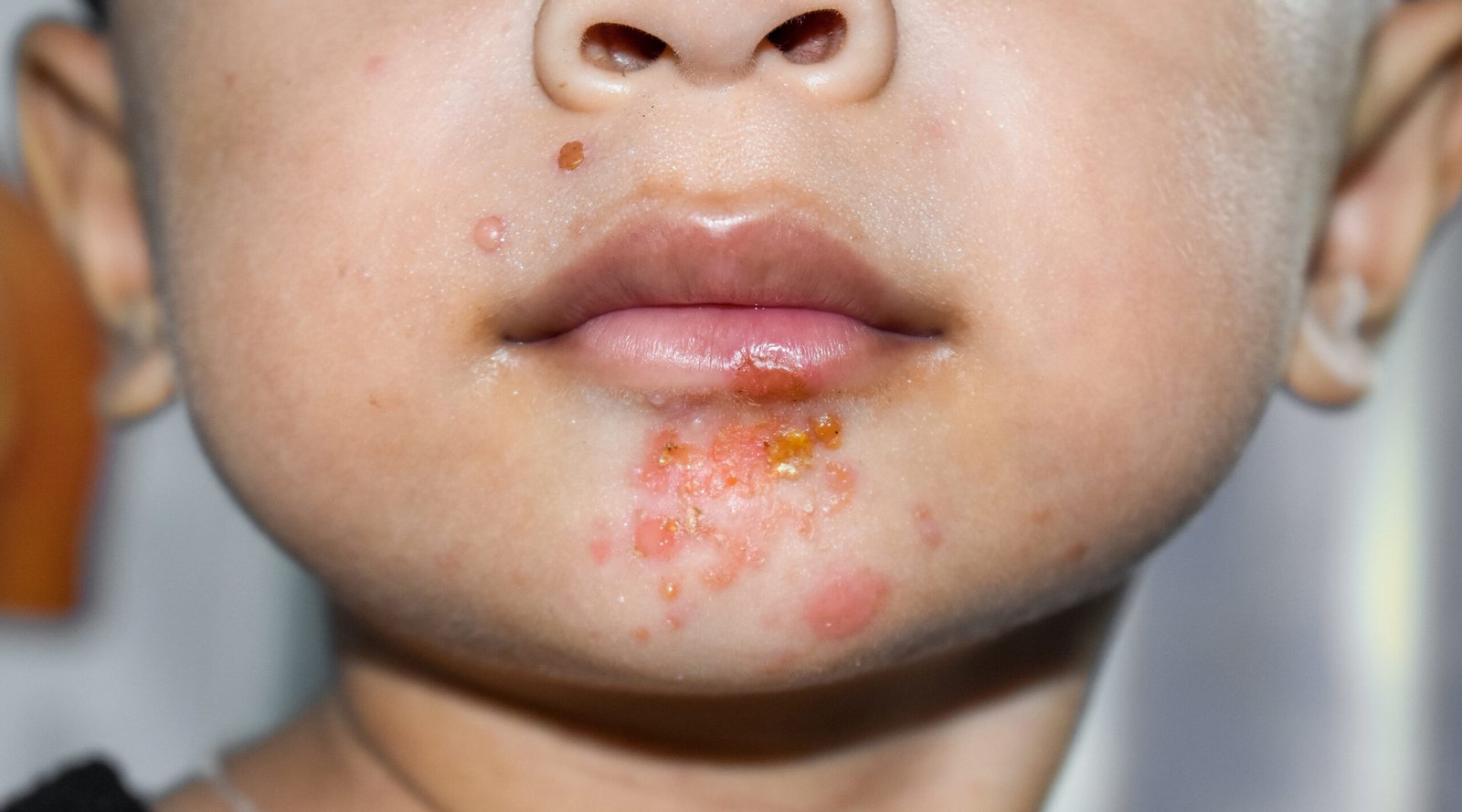
Impetigo is primarily caused by bacterial infections with Staphylococcus aureus or Streptococcus pyogenes.
It is a common, highly contagious skin infection, especially when there are open wounds, scrapes, or skin injuries.
Damaged skin makes it easier for bacteria to enter and multiply. Having atopic eczema or scabies can also increase the risk of developing impetigo.
This condition most often affects infants and young children, especially those living in hot and humid environments.
This is because their immune systems are not yet fully developed to fight bacterial or viral infections effectively.
However, adults can also develop impetigo, especially when their immune system is weakened or when skin wounds are not properly treated.
Key Signs and Causes of Impetigo
1. Small red, itchy sores
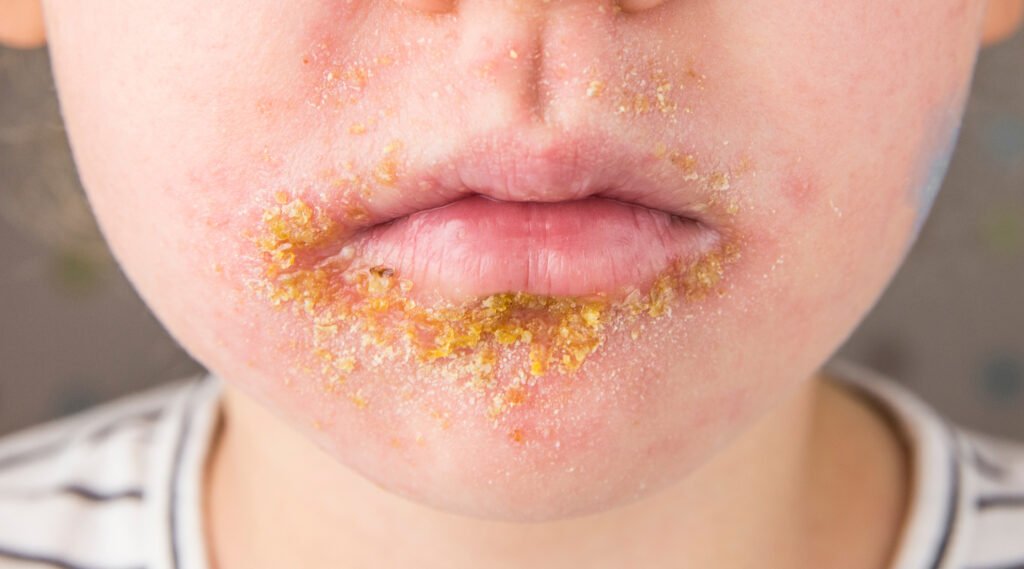
Early symptoms usually begin with small, red, itchy sores. These sores may develop into blisters, especially around the nose, mouth, hands, or neck.
The blisters may burst and ooze clear fluid for several days before forming honey-colored crusts—the classic sign of impetigo.
2. Fluid-filled or pus-filled blisters
In some cases, the blisters may contain fluid or pus. These blisters spread quickly and can cover a larger area of skin if left untreated.
After rupturing, the blisters leave behind a dry, hardened surface. Pus-filled blisters often indicate a more severe infection and require medical evaluation.
3. Itchy and uncomfortable skin
Itching is a common complaint in impetigo. However, avoiding scratching the affected area is important because it can spread bacteria to other parts of the skin or to other people.
If the bacteria spread, the infection can worsen and prolong the healing process.
Medical and Natural Treatments for Children and Adults
There are several treatment options for impetigo, ranging from medical therapies to natural remedies.
Proper management helps stop the infection, prevent bacterial spread, and speed up healing.
1. Topical Antibiotics
For mild cases, doctors usually prescribe topical antibiotics in the form of creams or ointments, which are applied directly to the lesions.
These medications help inhibit bacterial growth, control infection, and accelerate recovery.
2. Oral Antibiotics
If the infection is more severe or does not improve with topical antibiotics, doctors may prescribe oral antibiotics.
Treatment usually lasts 7–10 days, depending on the severity of the infection and the body’s response.
3. Proper Wound Care
To help speed up healing and prevent the infection from spreading, proper home wound care includes:
- Cleaning the sores every 8–12 hours with mild soap.
- Softening crusts with warm water and gently removing them using a disposable clean cloth.
- Pat the area dry with a clean towel.
- Applying topical antibiotics as directed by a doctor or pharmacist.
- Covering the area with a waterproof dressing.
- Avoiding scratching to prevent spreading bacteria to other skin areas or people.
4. Natural Remedies
In addition to medical therapy, several natural ingredients may help soothe symptoms and support healing, such as:
- Aloe vera: Helps soothe skin and reduce inflammation.
- Chamomile: Contains antibacterial and anti-inflammatory properties.
- Garlic or ginger: Has natural antibacterial effects.
- Honey: Known to help inhibit bacterial growth and promote wound healing.
These natural remedies can be applied directly to the affected skin. However, they should be used with caution, especially in children or individuals with sensitive skin. If symptoms do not improve, consult a doctor.
Tips to Prevent Impetigo Recurrence
Maintaining proper skin hygiene is crucial for preventing impetigo recurrence, especially because the infection is caused by bacteria that easily spread through broken skin or contaminated objects.
Here are preventive steps you can take:
1. Treat Wounds Immediately
If you experience cuts, scrapes, insect bites, or minor injuries, clean them right away with soap and running water.
Then apply an antibiotic ointment and cover with a clean bandage to prevent bacteria from entering and causing impetigo.
2. Shower or Bathe After Activities
After exercising or engaging in heavy activity, take a shower to wash away sweat, dirt, and bacteria from your skin. Use mild soap and dry with a clean towel.
3. Wash Hands Regularly
Wash hands with soap after using the toilet or when they feel dirty. This simple habit can prevent the spread of bacteria that cause impetigo.
Use a clean towel or disposable tissue to dry your hands.
4. Avoid Sharing Personal Items
Do not share towels, clothing, sports equipment, or bath items. These objects can easily transmit impetigo-causing bacteria among family members or friends.
If You Come Into Contact With Someone Who Has Impetigo
To reduce the risk of catching or spreading the infection, do the following:
- Avoid touching the infected skin area.
- Avoid touching items used by the infected person, such as towels, bedsheets, toys, or sports gear.
- Wear clean clothes every day, and avoid picking up dirty clothes directly from the laundry basket, especially damp sportswear, which can harbors bacteria.
Maintaining good hygiene helps prevent the spread of bacteria that cause impetigo and reduces the risk of reinfection for both children and adults.
References
American Academy of Dermatology Association. Accessed in 2025. 10 tips to prevent spreading impetigo and avoid getting it again.
Celveland Clinic. Accessed in 2025. Impetigo.
Mayo Clinic. Accessed in 2025. Impetigo.
NCBI. Accessed in 2025. Impetigo.





Leave feedback about this